
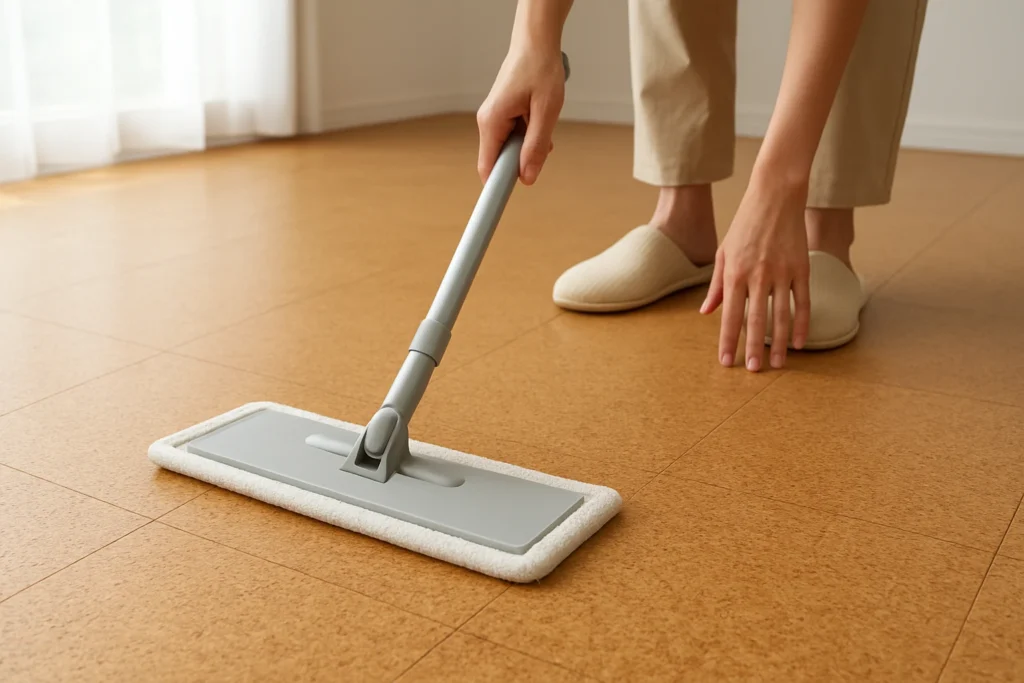
To clean cork flooring, remove loose dirt with a soft broom or a vacuum set for hard floors, then clean sealed cork with a barely damp microfibre mop and a cleaner approved for its finish. Dry any wet patches straight away, and never let water sit along the joints. Avoid steam mops, harsh cleaners, and rough scrubbers, and check the floor’s care instructions before wet-cleaning waxed, unsealed, or damaged cork.
Check the Cork Floor Finish Before You Mop
The right way to clean cork flooring depends on its protective finish, not just the cork underneath. If you do not know the finish or cannot confirm that it is in good condition, stick to dry cleaning until you can check the product’s care guide.

Cork is a natural material that can absorb water when its protective layer is missing or worn. A finish helps protect the surface, but it does not make every joint, cut edge, or board core waterproof.
Some floating cork floors have a fibreboard core beneath the cork layer. Water entering a joint can swell that core even when the top still looks fine. Glued-down cork tiles also need care, because moisture can reach the edges and affect the bond below.
Use your invoice, spare packaging, or the supplier’s care sheet to identify the product. Appearance alone is not a reliable way to tell wax from a clear coating, and pouring water onto the floor to test the seal can cause the very damage you want to avoid.
| Floor Condition or Finish | Safest Cleaning Approach | Main Caution |
|---|---|---|
| Sound clear coating, such as polyurethane | Dry cleaning followed by a barely damp mop and an approved cleaner | Keep water out of joints and worn edges |
| Waxed or oil-finished cork | Use the finish maker’s care products and method | A cleaner for a clear-coated floor may not suit this finish |
| Unknown finish | Remove dust and grit without water while you seek advice | Do not guess based on shine or colour |
| Bare, peeling, cracked, or badly worn surface | Dry-clean gently and arrange a finish assessment | Mopping can carry moisture into exposed cork |
As with wooden flooring, care needs to match the surface coating. A bottle marked for wood or hard floors is not enough on its own to confirm that it is suitable for cork.
Keep the product name and care sheet with your cleaning supplies. If you need help finding the right care guidance, contact your original supplier or a flooring business such as Floor World Dubai with the product details and clear photos of the surface.
How to Clean Cork Flooring Step by Step
For sealed cork in good condition, remove grit first, clean with very little moisture, and dry any remaining wet patches. The mop should lift dirt without leaving a trail of water behind it.

You need a soft broom or suitable vacuum, a clean microfibre mop pad, the approved cleaner, and an absorbent cloth. A flat mop is often easier to control than a thick string mop, which can hold more water than you expect.
- Remove loose dirt. Sweep gently or vacuum with a soft hard-floor head. Turn off the rotating brush or beater bar, and check that the vacuum wheels are clean so they do not drag grit across the finish.
- Check for spills and stuck-on dirt. Blot liquids before you mop, and loosen dried food with a lightly dampened cloth rather than scraping it with a blade.
- Prepare the cleaner as directed. Follow the stated dilution exactly. If the product is ready to use, do not add concentrate or mix it with another cleaner.
- Test a hidden patch. Use a small spot beneath movable furniture and let it dry fully. Stop if the finish becomes dull, sticky, cloudy, or discoloured.
- Dampen the mop pad lightly. Follow the cleaner’s application instructions, using the smallest amount needed. Unless the care guide says otherwise, apply it to the pad rather than spraying liquid across floor joints.
- Clean a small area at a time. Use light, overlapping passes and change or rinse the pad when it becomes dirty. A dirty pad spreads fine grit and can leave streaks.
- Remove leftover moisture. Wipe damp patches with a dry cloth, especially beside walls, thresholds, and joints. Keep foot traffic off the floor until it is dry.
To check the moisture level, press the prepared mop pad over a sink. It should not drip, and the floor should not show standing droplets after a pass. If you can see beads of water collecting at the seams, stop and use a drier pad.
Do not go over a stubborn mark with a wetter mop. Clean that spot by hand instead, because repeated wet passes expose a much wider area to moisture without doing much more to loosen the mark.
Which Cleaners Are Safe for Cork Flooring?
Use a cleaner that the cork flooring or finish manufacturer approves, usually a pH-neutral product for routine care. A pH-neutral cleaner is neither acidic nor alkaline, but that alone does not prove it suits every cork finish.

The wrong cleaner can leave a film, soften a coating, or change its sheen. Using more cleaner does not help if the extra product stays on the floor and attracts fresh dirt.
| Cleaner or Method | Use on Cork? | Reason |
|---|---|---|
| Manufacturer-approved cork floor cleaner | Yes, for the stated finish | Designed for a compatible care routine when used as directed |
| General pH-neutral floor cleaner | Only if approved for the floor and finish | Some formulas leave residue or are meant for other surfaces |
| Plain water | Only when the care guide allows it, using very little | It can remove light soil, but excess moisture remains a risk |
| Vinegar mixture | Avoid unless the manufacturer specifically permits it | Its acidity may affect the finish, and home dilution is inconsistent |
| Dish soap | Not the first choice | It can leave a film and may need more rinsing than cork should receive |
| Bleach, ammonia, or strong degreaser | Avoid for routine cleaning | These may harm the coating or alter its appearance |
| Steam mop | Avoid | Heat and moisture can affect finishes, joints, and the layers below |
| Abrasive powder, steel wool, or rough pad | Avoid | Scrubbing can scratch or wear through the protective finish |
| Wax, polish, or oil soap | Only for a finish that specifically requires it | An unsuitable layer can leave buildup and complicate later recoating |
Do not use a homemade mix simply because its ingredients seem mild. Vinegar, soap, and essential oils each change the solution, so you still need to check that the mix is safe for the finish.
For routine cleaning, avoid products that promise to add shine unless the floor maker approves them. A naturally matte cork floor does not need to become glossy to be clean.
How to Remove Spills, Scuffs, and Sticky Marks
Treat marks on cork flooring with a soft cloth and a small amount of approved cleaner before trying anything stronger. Work on the mark itself rather than soaking the area around it, and stop if the finish changes.

The key difference is whether the mark sits on the finish or has passed beneath it. Surface dirt may lift with gentle cleaning, while a dark patch inside the cork or a cloudy patch within the coating may need repair rather than stronger chemicals.
Food, Drinks, and Grease
Blot drinks straight away with an absorbent cloth, then clean the residue with the approved product on a lightly dampened cloth. For dried food, hold the cloth against the spot briefly to soften the residue, lift it gently, and dry the area.
Grease needs a suitable cleaner rather than extra water. If the first gentle pass leaves a trace, use a fresh cloth and repeat as the product’s directions allow instead of reaching for a strong kitchen degreaser.
Shoe Scuffs and Sticky Residue
Try a dry microfibre cloth on a light shoe scuff, then move to the approved cleaner if needed. Keep pressure gentle, because hard rubbing can leave a shiny patch on a matte finish even when it removes the mark.
Do not use a melamine cleaning sponge, often sold as a magic eraser, without the manufacturer’s approval. It works through fine abrasion and may dull the coating. Adhesive removers, alcohol, and other solvents also need specific approval before use.
For a raised piece of sticky material, lift only what comes away easily with a fingernail or a smooth plastic edge held almost flat. Stop if the tool catches the finish, and never use a metal blade.
Pet Accidents
Blot a pet accident at once, then clean the area with a product approved for the cork finish. Do not flood the spot with enzyme cleaner simply because it is labelled for pet stains. Some products need to stay wet for a long time to work, which may not suit cork.
If odour remains after the surface is clean and dry, liquid may have entered a joint or reached a lower layer. Repeated soaking can worsen the damage, so ask the supplier about a suitable treatment and whether the affected board needs inspection.
What to Do About Cloudy Patches, Swelling, or Water Damage
Stop wet cleaning if cork flooring becomes cloudy, develops raised edges, or stays dark after drying. These signs can mean residue, finish damage, or moisture beneath the surface, and each needs a different response.
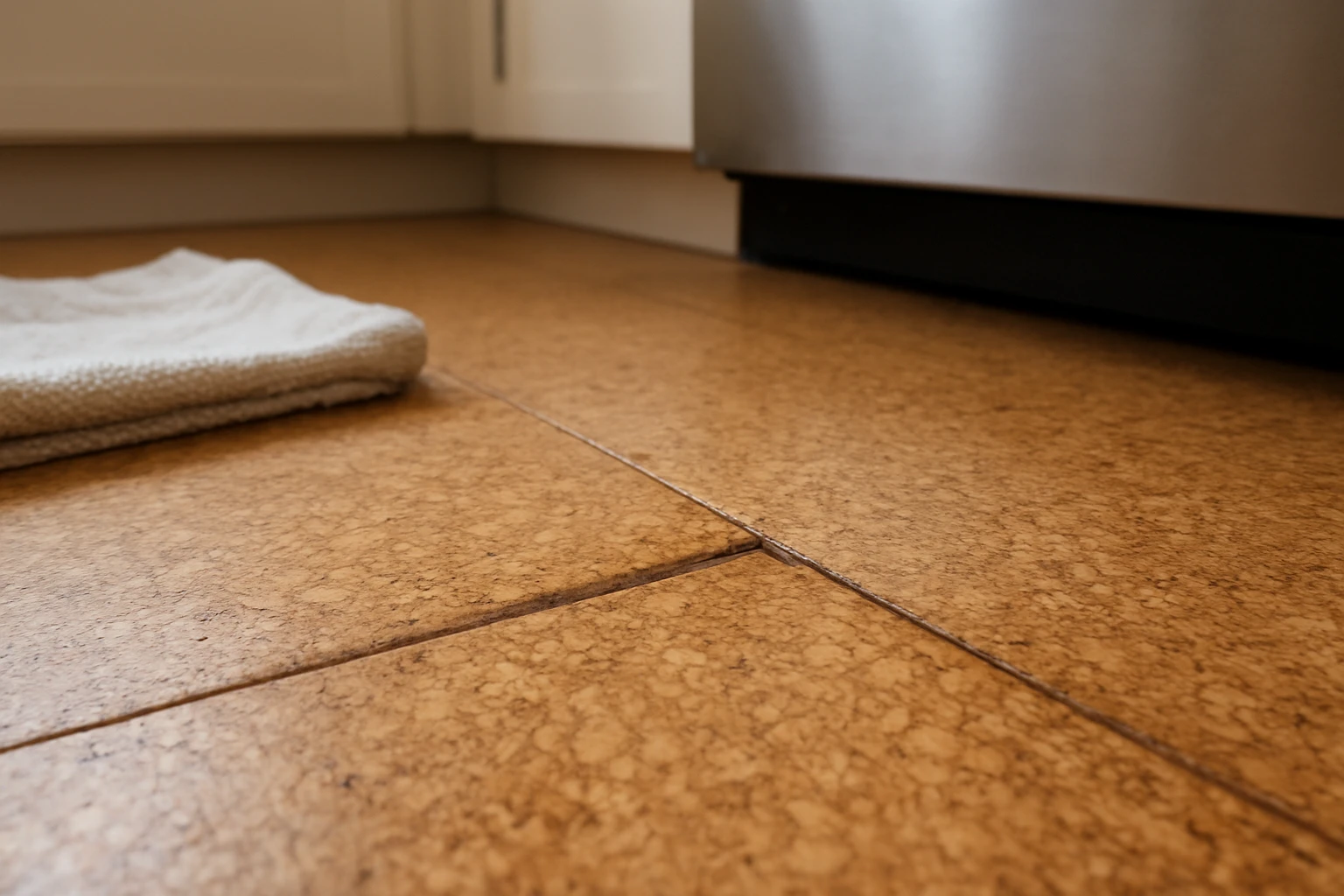
| What You Notice | Possible Cause | What to Do Next |
|---|---|---|
| Streaks or a sticky feel after cleaning | Too much cleaner, a dirty pad, or product buildup | Check the dilution and ask about an approved residue-removal method |
| A cloudy patch | Residue, trapped moisture, or a changed finish | Let it dry and seek advice if the patch remains |
| A dark joint or edge | Moisture entering the cork or layers below | Stop adding water and check for the source |
| Raised seams or swollen boards | Moisture in the board or its core | Arrange an assessment rather than sanding or forcing the edge down |
| A worn patch that catches dirt | Loss of the protective finish | Discuss finish repair before routine damp cleaning resumes |
If a leak is involved, deal with the water source first and remove standing water without spreading it. Use normal ventilation and safe airflow, but do not aim a heat gun or strong heater at the floor to force it dry.
Kitchens need special attention around sinks, fridges, and dishwashers. When choosing kitchen flooring, remember that a water-resistant surface does not guarantee that joints or the layers beneath it can withstand a slow appliance leak.
Do not sand a stain just to see whether it comes out. Some cork floors have only a thin cork surface, and sanding can cut through it. Repairs depend on how the floor is made, the thickness of the remaining surface, and the finish, so check the product details before choosing a treatment.
A Cleaning Routine That Keeps Cork in Good Shape
Remove grit as often as it builds up, clean spills at once, and damp-mop only when the floor needs it. A busy entrance may need dry cleaning daily, while a quiet bedroom may need much less attention.
In Dubai, fine sand tracked in from outside can act like sandpaper under shoes and chair legs. Removing that grit often does more to protect cork than adding another wet-cleaning day to the calendar.
| When | What to Do | What to Watch |
|---|---|---|
| After sandy shoes or heavy foot traffic | Sweep or vacuum the affected area | Grit near doors and beneath chairs |
| As soon as a spill happens | Blot, spot-clean if needed, and dry | Liquid collecting at joints |
| When soil remains after dry cleaning | Use the barely damp mop method | Wet trails, streaks, or a dirty mop pad |
| During regular room cleaning | Check chair pads, mats, and appliance areas | Trapped grit, damp rugs, or worn edges |
Use floor-safe felt pads beneath furniture, and replace them when they collect grit or wear thin. Lift furniture instead of dragging it, because a heavy leg can scratch the finish even on a floor that has just been cleaned.
Keep entrance mats clean and use only backings approved for the cork finish. Rubber or latex backings can stain some coatings, while a damp mat can hold moisture against the floor without leaving an obvious puddle.
The best routine leaves the cork clean and dry without changing its feel or sheen. If you need more water, more pressure, or stronger chemicals each time you clean, check for product buildup or a worn finish rather than using harsher cleaning methods.
Frequently Asked Questions
Can I Use a Robot Vacuum on Cork Flooring?
A robot vacuum can be suitable for cork flooring if the floor manufacturer allows it and the wheels and brushes do not scratch the finish. Keep the wheels free of grit and check the floor after the first few runs. Disable any mopping function unless its moisture output and cleaning solution are approved for your cork floor.
How Can I Disinfect Cork Flooring Safely?
Use a disinfectant on cork flooring only when it is approved for the floor’s finish and you can follow its label without soaking the surface. Many disinfectants require the floor to stay wet for a set contact time, which can conflict with cork care instructions. Do not shorten that time and assume the floor has been disinfected.
How Often Should Cork Flooring Be Resealed?
Cork flooring should be recoated according to its product instructions and finish wear, not a single fixed schedule. Busy walkways may need attention before less-used rooms, and some factory finishes need a specific repair system. Ask about recoating before the protective layer wears through, and check whether previous cleaning products could affect the new coat.
Is a Spray Mop Safe for Cork Flooring?
A spray mop can be safe for sealed cork if the flooring manufacturer approves the cleaner and the mop applies very little liquid. Refillable models do not make every cleaning solution suitable, so check both the bottle and floor care guide. Avoid repeated spraying over one spot, especially along joints or worn areas.
Why Does Cork Flooring Look Faded Even After Cleaning?
Cork flooring can look faded because of sunlight, finish wear, or cleaner residue, and cleaning will not reverse every cause. If exposed areas differ from those beneath furniture, light may have changed the colour. Avoid stronger cleaners to restore it, and ask the supplier whether shading, finish care, or repair is the right next step.


